Free shipping for orders over €50

Radius cutter

Radius milling cutters from AM-Zerspanungstechnik

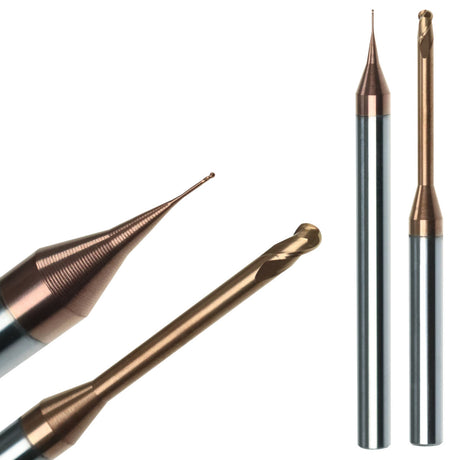
Precise shaping with our high-quality radius cutters ! Discover a diverse selection of radius cutters for professional applications in metal, wood, and plastic. Our premium radius cutters offer maximum precision and durability for a wide variety of milling jobs. Whether you want to create precise radii or machine contours, we have the right radius cutter for your needs. With coating options like TiAlN and TiSiN, our tools offer optimal performance and a longer service life. Optimize your workflows and discover our wide range of radius cutters now!

View as

Buying advice

[title] choose correctly

Frequently Asked Questions

Questions & Answers about Radius cutter

What is a radius cutter?

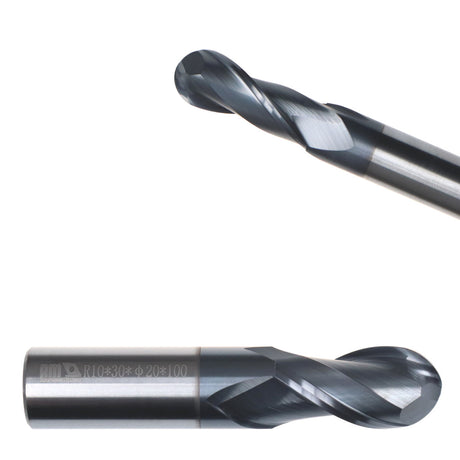
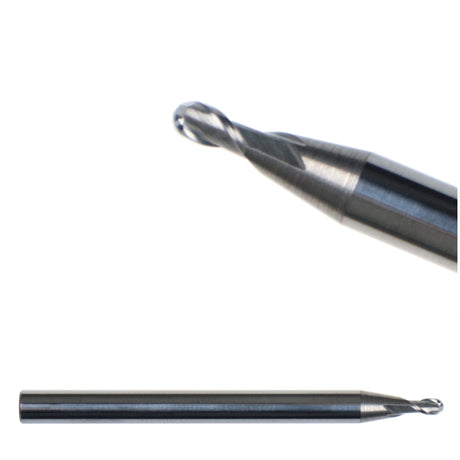
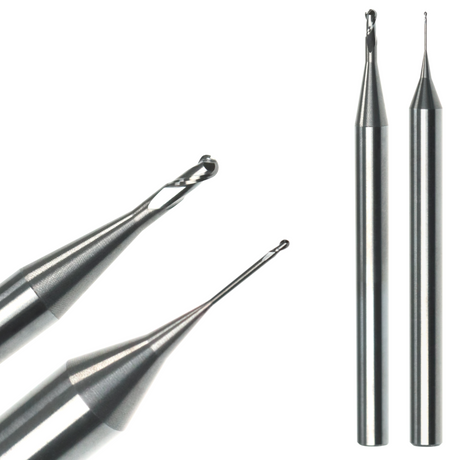
A radius cutter has a round (convex) face and is therefore used to create rounded transitions, radii, and 3D contours. If the face has a full radius (i.e., a complete hemisphere), it is called a ball-nose cutter. Radius cutters are the standard tool for fairing freeform surfaces in mold and tool making.

What is the difference between a radius cutter and a ball-nose cutter?

The terms are often used synonymously. Strictly speaking, the ball nose end mill has a full radius across the entire face (R = half the diameter), while "radius cutter" more generally refers to any cutter with a rounded cutting edge. For 3D surfaces and fillets, the ball nose version is used in both cases.

What is the difference between a radius cutter and a torus cutter?

The radius/ball mill has a completely round face and is designed for 3D finishing. The torus mill, by contrast, is a flat face mill with only a small corner radius - the sturdy corner allows for heavy roughing and finishing. In short: radius = fully round (3D finish), torus = flat with a sturdy radius at the corner (machining).

What is a radius cutter used for?
What radius or diameter do I need?

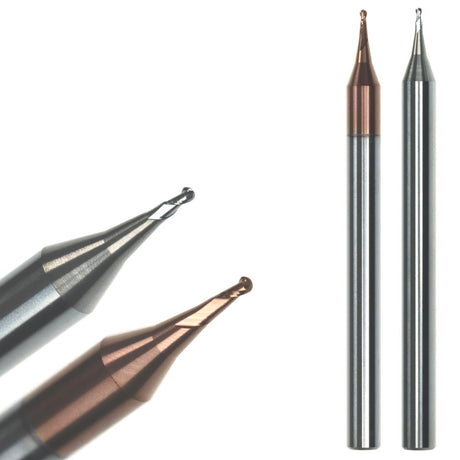
The radius depends on the smallest radius of curvature required by the part—the milling radius must not be larger than the smallest internal radius of the contour. For fine details, micro versions are used from Ø 0.2 mm, while larger surface areas require correspondingly larger ball mills. Often, roughing is done with a larger tool and finishing is done with a smaller radius.

Which coating is right?

TiAlN for steel and cast iron, TiSiN for stainless steel and hardened materials. For aluminum and non-ferrous metals, uncoated or polished radius cutters are better, because otherwise material builds up on the fine radius, damaging the surface finish.

How do I achieve smooth 3D surfaces?

Plane from path to path using a small side feed (small path spacing), high speed, and uniform feed rate. The smaller the path spacing, the smoother the surface—but processing time increases. Secure clamping and a tool with high concentricity are essential for clean freeform surfaces.