Free shipping for orders over €50

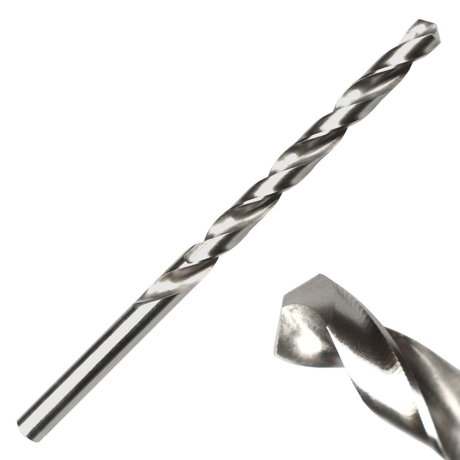
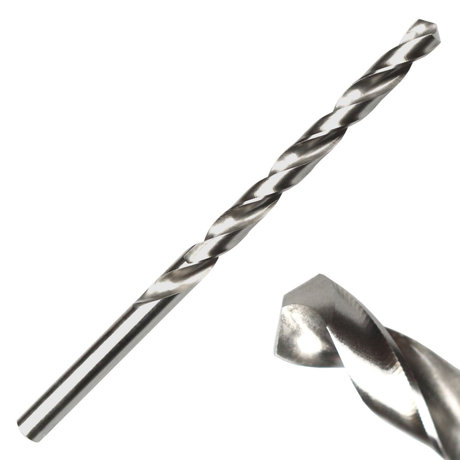
HSS Twist Drill Bit

HSS twist drills are the standard for drilling into metal, steel, and non-ferrous materials. In this category, we offer the complete HSS range for workshop and production use:

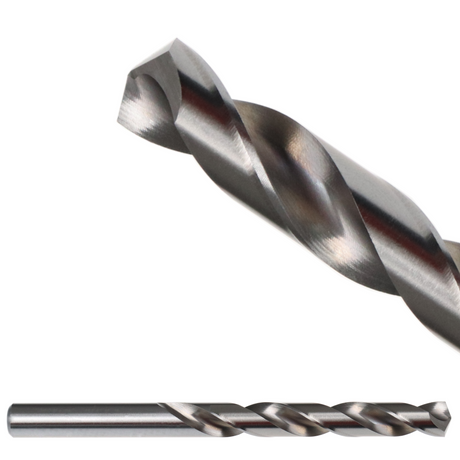
  • HSS twist drills, plain, DIN 338 – the classic with a cylindrical shank
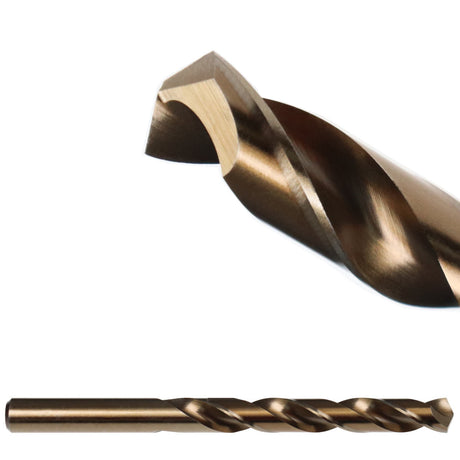
  • HSSE / HSS-Co drills (cobalt alloy) – longer service life for hard and stainless steels
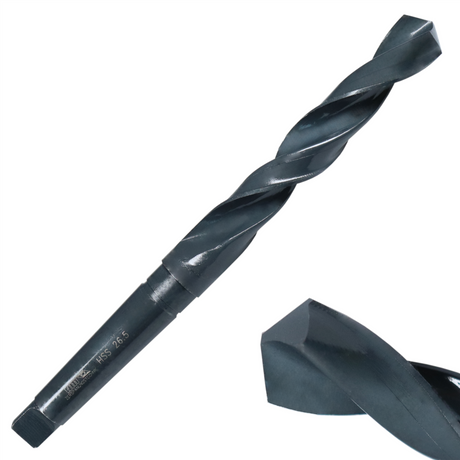
  • HSS twist drills with Morse taper (MT), DIN 345 – for drill presses with taper mount
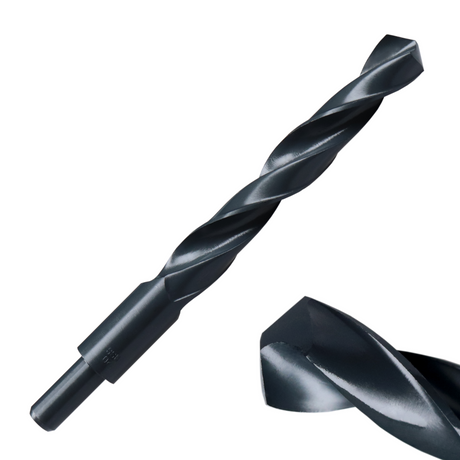
  • HSS drills with reduced shank – large diameters in standard drill chucks
  • Extra-long twist drills / metalworking drills, DIN 340 – for deep holes

All drills are designed for professional, continuous use. Not sure which version is right for your application? We answer the most important questions below.

View as

Buying advice

[title] choose correctly

Frequently Asked Questions

Questions & Answers about HSS Twist Drill Bit

What is an HSS twist drill bit?

An HSS twist drill bit is the standard high-speed steel (HSS) drill bit for drilling into metal, steel, and non-ferrous materials. Its two cutting edges transport the chips out of the hole. HSS is tough and break-resistant, making it the versatile all-rounder—for more demanding applications, cobalt-alloyed (HSSE) and coated versions are available.

What is the difference between HSS-R, HSS-G, and HSSE (cobalt)?

HSS-R is roller-ground, inexpensive and intended for simple drilling. HSS-G is ground and therefore more precise and durable - the better choice for clean holes in steel. HSSE (also HSS-Co) is alloyed with cobalt, withstands higher temperatures and is therefore the right choice for stainless steel, rust-free and hard steels.

Which tip angle is right?

118 degrees is the universal point angle for mild steel. 135 degrees (usually with a split point) is suitable for stainless steel and hard materials because the drill bit centers itself and does not wander. For aluminum and plastic, a sharper angle is chosen so that the drill bit does not "pull" and cuts cleanly.

What do DIN 338, DIN 340 and DIN 345 mean?
What types of shafts are there?

The cylindrical shank is standard and is clamped in the drill chuck. The reduced shank is thinner than the drill diameter - this allows large drills (up to approx. 30 mm) to still be fitted in a normal 13 mm drill chuck. The Morse taper shank (MT) is inserted directly into the spindle and transmits high forces, ideal for large diameters.

Which HSS drill bit is suitable for stainless steel?

For stainless steel (VA/Inox), an HSSE (cobalt) drill bit with a 135-degree split point is the right choice. The technique is important: low speed, constant feed rate, and good cooling—never "dwell" in the hole, otherwise the material will work-harden and the drill bit will become dull.

HSS or carbide - when is solid carbide worth it?

HSS is tough, inexpensive and ideal for most drilling in steel, aluminum and wood - especially for manual work or with unstable machines. Carbide (solid carbide) is significantly harder and more wear-resistant and is worth it for hard/hardened materials, high speeds and series production on a stable CNC. For hardened steel or series production of any material, carbide is the better choice.